Mystery Games: 4 Whodunits You Actually Solve
Pick a case, search its rooms, and crack the puzzle waiting in each one. Every clue you find crosses another name off the list, and by the last room only one suspect is still standing. 4 cases are open, 20 rooms between them, and each one remembers how far you got. No sign-up, nothing to download, and nothing you can lose.
The cases
Every case opens the same way: a place with one famous thing in it, a night when that thing went missing or came back changed, and a short list of people who were there. What follows is the front of each case file, the part you read before you open a single door. The rooms, the puzzles and the answers stay inside the game.
The Lady in Two Portraits
Hollowmere Hall. 5 rooms, 5 suspects, and one of them is not telling you everything.
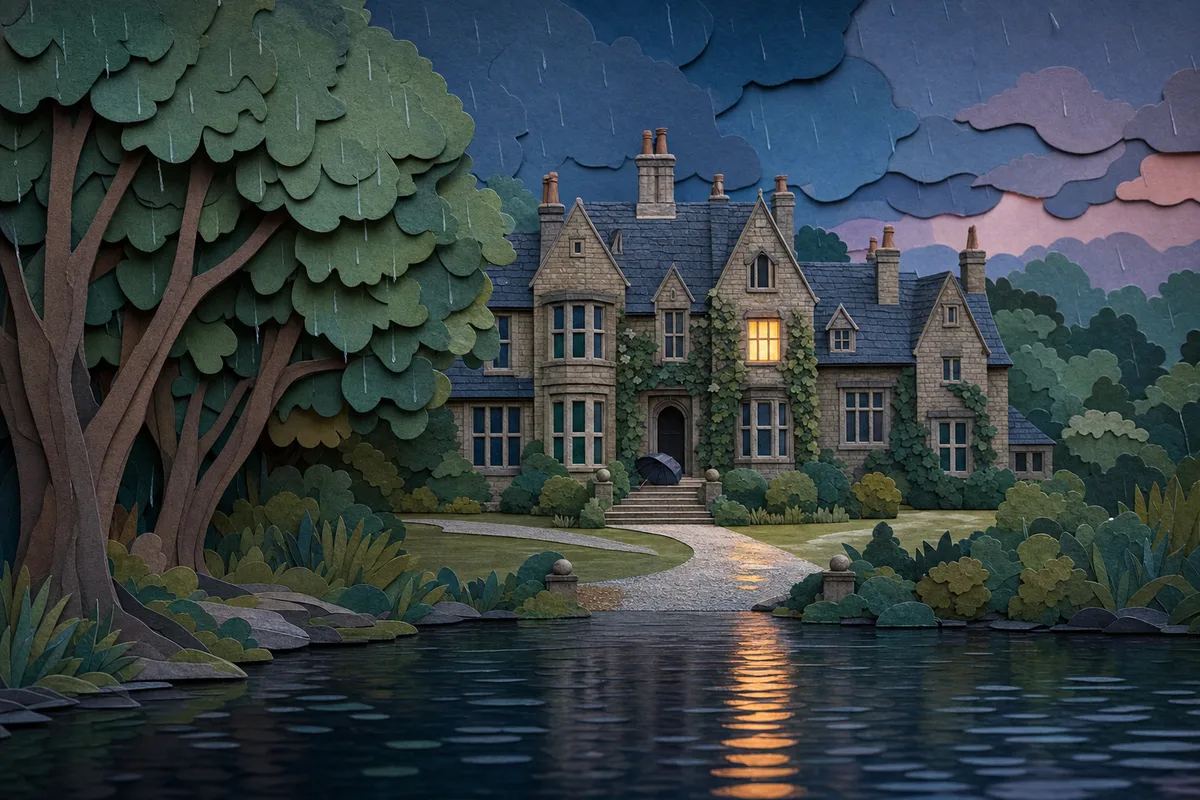
Hollowmere Hall has one famous thing in it, and tomorrow the whole county is invited to look at it. The portrait of Lady Maren Hollowmere has hung in the long gallery for ninety years, and on Friday it goes on a wall in London instead, because the family has agreed to sell.
This morning there are two of her. The same gown, the same green background, the same gold frame, hanging side by side where there was one. Somebody spent the night making a swap and wanted it seen.
Nothing is broken and nobody is hurt. Five people slept in the house. Walk the rooms, work out what happened in each of them, and by the time you reach the last one you will know which of the five it was.
The suspects
- Marta Quill, Housekeeper, twenty two years in the house
- Ivo Larch, Gardener
- Desmond Ashby, Art dealer, here to value the portrait
- Hugh Bray, Retired colonel, the family's brother in law
- Nella Ferris, Picture restorer, cleaning the frames for the sale
The rooms
- The Long Gallery. Two Lady Marens, side by side, under their own picture lamps. The velvet rope is still across. A step ladder stands folded against the panelling and a white glove lies on the runner.
- The Kitchen. The range is cold and the supper things are washed. The cook has gone to her sister for the week, but she left the evening on a spike of paper slips, and she notices everything.
- The Clock Room. Eleven clocks and one small iron strongbox, which is where the spare keys of this house live. The colonel sets every lock to a time, and he writes a time the way the house ledger writes it, in four figures.
- The Study. The desk lamp is still on and the wastepaper basket is on its side. Somebody tore a note into pieces and then made a poor job of throwing it away.
- The Attic Studio. The restorer's room under the roof. An easel, a stretched canvas with nothing on it yet, and a table of jars and brushes that have been in this house longer than anyone in it.
The Marrow That Changed Places
Marrow Fair. 5 rooms, 5 suspects, and one of them is not telling you everything.
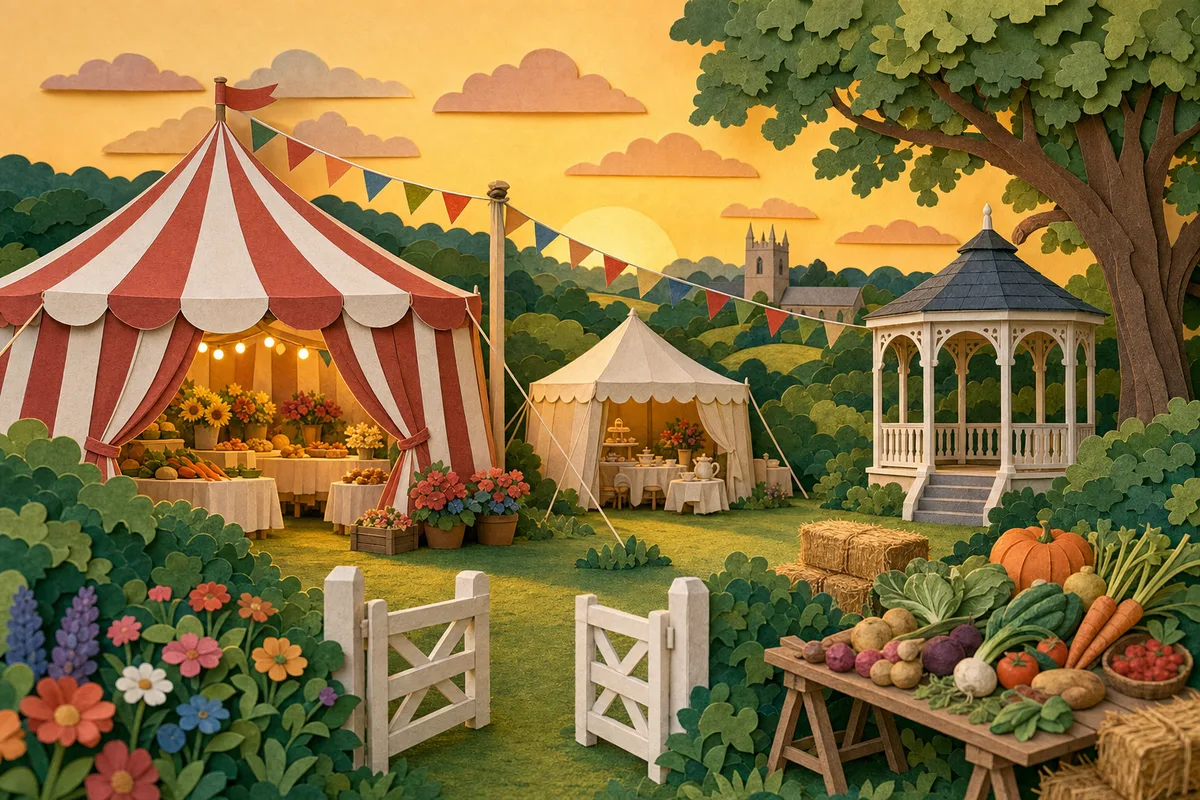
Every August the village of Little Hollow weighs its vegetables in a striped marquee and argues about it until Christmas. The giant marrow class is the one that matters, and for nine years running it has been won by the same shed at the end of Pike Lane.
This morning the marrow on the winner's trestle is not the marrow that was weighed in last night. It is the right shape, the right green and the right rosette, and it is eleven pounds lighter, which is the sort of thing a scale notices and a crowd does not.
Nothing is stolen. The heavy one is somewhere on this field, and five people had a reason to move it. Work the fair, and by the last tent you will know which.
The suspects
- Prue Halloway, Show secretary, keeper of the cash box
- Dorothy Banks, Runner-up, nine years running
- Tobias Reed, Judge, down from the county show
- Ivy Marsh, Fourteen, wins the children's class every year
- Wendell Pike, Grower of the winning marrow, nine years running
The rooms
- The Show Marquee. Trestle tables down both sides, rosettes pinned to the front rail, and the winner's marrow sitting under a hand-lettered card. A single barrow wheel has cut a track through the wet grass at the back of the tent.
- The Tea Tent. Urns, a trestle of cups, and the whole village passing through it between six and nine. The rota on the pole says who was where, and the queue remembers the rest.
- The Secretary's Table. A folding table, a tin cash box with a four-figure lock, and the show's paperwork weighted down with a stone. Prue sets every lock on this field to a time and writes it the way the ledger writes it.
- The Lost Property Table. A cardboard box of gloves, a bent umbrella, three unclaimed rosettes and a page of a notebook that somebody tore up and dropped in with them.
- The Potting Shed. The shed at the end of Pike Lane, and the barrow outside it with a green smear along one handle. Inside, the bench holds the tools of nine winning years.
The Tortoise Who Was Not There
Fennimore Winter Garden. 5 rooms, 5 suspects, and one of them is not telling you everything.
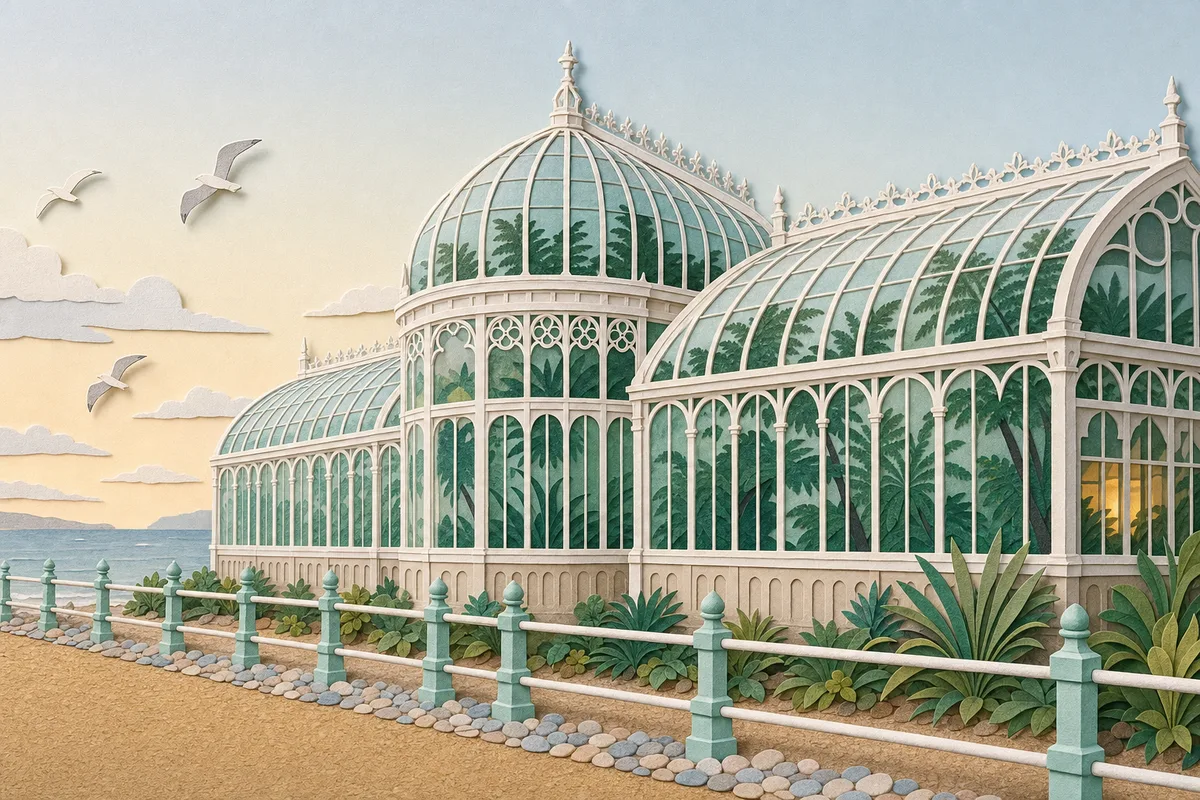
Fennimore Winter Garden has stood on the seafront since the first pane went in, and for most of that time it has had a tortoise in it. Hesper hatched under the tree ferns twenty summers after the glass, and she has never once been outside the building. Tomorrow the doors open again after four years of scaffolding, and the whole town is coming to look at her.
This morning the pen under the tree ferns is empty. The mesh lid is off and standing against the wall, the wire on the little gate has been unwound and coiled neatly on the post, and the sand inside has been raked flat by somebody who would rather not leave marks in it.
Nothing is broken and nobody is hurt. Hesper is somewhere in this building, and going by the dandelion stalks she is being fed. Five people were here last night. Walk the rooms, work out what happened in each one, and by the last one you will know which of the five it was.
The suspects
- Connie Vale, Head gardener, forty one years under this roof
- Dilys Court, Kiosk volunteer, Tuesdays and Fridays for nineteen years
- Nathaniel Prowse, Surveyor, down from the city for the trustees
- Bryn Cadogan, Apprentice gardener, three months in
- Esme Rowntree, Photographer, here for the reopening feature
The rooms
- The Palm House. Tree ferns to the roof, warm wet air, and a raised brick bed in the middle with an empty pen in it. Pinned to the post is the photographer's test frame from last night, printed damp and still curling at one corner.
- The Ticket Kiosk. A wooden kiosk the size of a wardrobe, a turnstile that clacks, and the volunteers' book open on the shelf with a pencil on a string. Dilys writes down everything, including a great many things nobody asked her to.
- The Head Gardener's Office. A desk under a window of frosted glass, four years of restoration paperwork weighted down with a trowel, and a green key cabinet on the wall with a four-figure lock. Connie sets every lock in this building to a year.
- The Seed Room. Envelopes in shoe boxes, labels in a tin, and a paraffin heater that has not been lit since March. Somebody tore a label into pieces over the waste bin and made a poor job of hitting it.
- The Boiler House. Down three steps at the end of the yard, and warm as a summer afternoon. The boiler is the one the building was put up around, and the tools leaning against it have been leaning there a very long time.
The Pavilion That Came Back
Wrenlow Model Village. 5 rooms, 5 suspects, and one of them is not telling you everything.
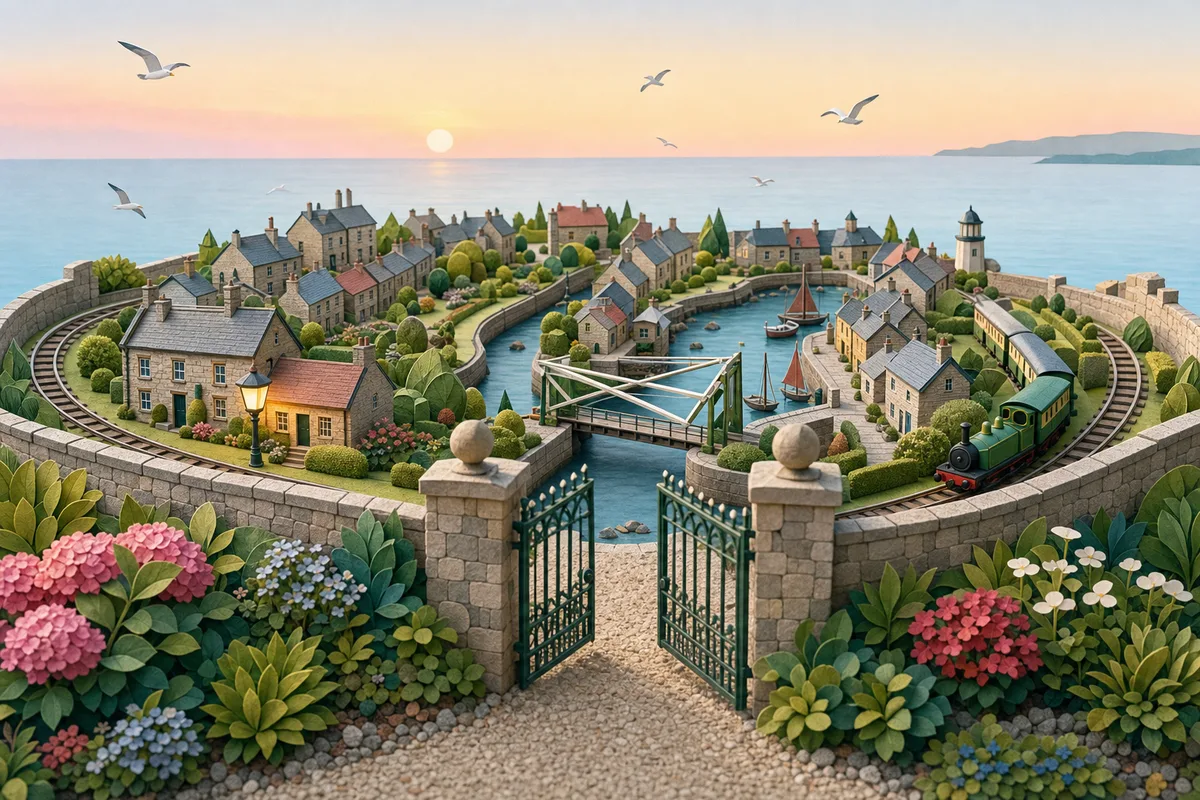
Wrenlow Model Village is the whole town at one inch to the foot, laid out in a walled garden on the seafront with a real tidal creek running through it and a little railway round the outside. Ossian Grieve built the first forty buildings himself and left the rest to a trust, and every Thursday evening a working party of five gets it ready for the season.
The Pier Pavilion came down last November. It was the best thing on the front for eighty years and the survey said it had a season left in it at most, so the borough took it down and the town has argued about nothing else since. In the model village its plot has been a square of bare turf with a peg in it ever since, because nobody could agree what should stand there.
This morning the Pier Pavilion is standing on it. Two feet of it, dome and ironwork and the herring on top, lit from inside and wired into the night circuit, bedded into mortar that was still soft when the dome went down onto it. Nothing has been taken and nothing has been swapped. Something has been added, by somebody who spent months on it and then said nothing. There was nothing on that plot but a bed of fresh mortar when the gates were chained at half past ten last night, and the pavilion was lit when the harbour watchman came along the front at midnight. Walk the rooms, and by the last one you will know which of the five it was.
The suspects
- Mave Tullick, Warden of the model village, twenty nine seasons
- Gil Prosser, Driver and fitter of the fifteen inch railway
- Dot Meager, Sign writer, took the rock shop on the front in the spring
- Denny Ockle, Seventeen, oils the loco and sells the railway tickets
- Selwyn Roach, Retired builder, lays the paths and the bases here
The rooms
- The Model Esplanade. The model's seafront, forty buildings at one inch to the foot, with the new pavilion standing on the plot that has been bare since November. Its roof lifts off. Inside, the ceiling is painted with gulls. Pinned in the shelter beside the plot is the last photograph anybody took of the real building.
- The Loco Shed. Oil, warm metal and the little green engine over its pit. The working party's rota is chalked on the door, the shed book is open on the bench, and the boathouse launch board can be read through the window from here.
- The Sluice House. A brick hut on the harbour wall doing three jobs at once. It works the sluice that feeds the model's creek, it holds the engine that swings the harbour bridge open for the tide, and bolted to the back wall is a green switch box with the village's night circuit inside it and a four figure lock on the door. The bridge keeper's book hangs on a nail beside it.
- The Paint Shop. Fascia boards drying on trestles, a rack of quarter pint tins, and a jar of white spirit on the sill with somebody's torn up docket floating in it. The pieces have curled but the stencil hand on them is still perfectly readable.
- Arch Seven. A barrel roofed lock up under the promenade, nine feet of bench down one side, and the trust's winter store of models waiting on it for the season. Somewhere behind them the culvert runs out to the creek, and with the sluice shut against the tide it stands dry enough to walk.
How these mystery games work
- Choose a case from the case files. You can leave one part way through and come back to it: each case keeps its own progress, so starting another loses nothing you have found.
- Read the case, then walk into any room you like. Nothing is locked and the rooms can be searched in any order.
- Every room holds a different puzzle: remember a picture you are only shown for a moment, work out where everybody was standing from what a witness says, open a locked box by reasoning out its number, put a torn note back together, find the one object in a row that does not belong.
- Solving a room writes a clue in your notebook. Most clues rule somebody out; the rest tell you what was really going on.
- When every room is searched, name your suspect. Pick a wrong one and the game answers with the clue that clears them, so you can think again.
- Nothing is timed except the short look you get at a picture, and you can look at it again as often as you like.
- Stuck in a room? Every one of them carries three hints in order: a nudge, then a narrower one, then the answer. Three hints a day are free, and the three are shared across the cases.
The accusation is a deduction, not a guess
A mystery is only worth solving if the answer follows from the evidence. Every clue names the people it rules out, and every case is checked before it ships: each suspect except the guilty one must be cleared by something you found, the guilty one must be cleared by nothing, and exactly one name must be left. The testimony puzzle is checked the same way, by working out every possible arrangement of the people across the places and refusing to ship the case unless exactly one arrangement fits the statements.
Cosy, and safe for the family
Nobody is hurt in any of these cases. They are places where something was swapped, moved or quietly borrowed, and the worst thing anyone does is keep a secret badly. They suit about age ten upward: the reading is plain, the puzzles are fair, and there is no fail state anywhere in them.
More free puzzles at BrainPuzzles
When a case is closed, compare two pictures in spot the difference, work a grid of numbers in sudoku, pour the colours in sort puzzle, or try a riddle quest.